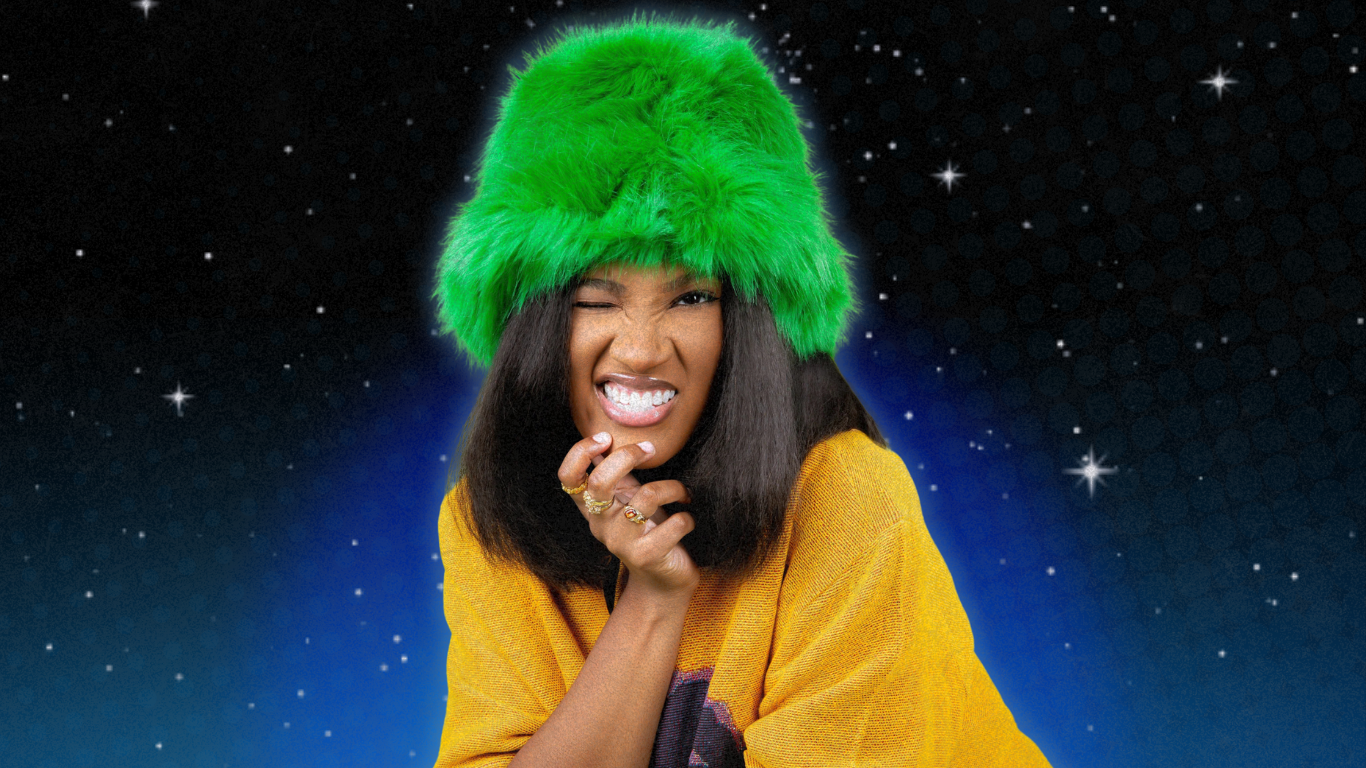
Cheyenne Ewulu credits Akira Toriyama with shaping her life. Like many millennials, her love for anime started with Toonami broadcasting “Dragon Ball Z,” where Goku protected planet Earth against other alien godlike forces such as Frieza and Cell. Since its 1998 premiere, the series took the world by storm, inspiring many to scream at the top of their lungs, hoping to turn Super Saiyan.
Few, however, are as devoted as Ewulu.
"I don't know many people who know more about DBZ than me,” she said, lifting one of her novelty items she's collected from the franchise. “If you're gonna talk to me about DBZ, you better have all your facts lined up.”
She spoke with intent and passion, as if she was issuing a challenge that would be ridiculous to take on.
Considered as one of the founding fathers of the shonen genre, "Dragon Ball Z" follows Goku, Vegeta and their allies as they overcome the odds to achieve the impossible. Beyond its action-packed battles, there are other themes throughout anime that Black audiences often deeply resonate with in their day-to-day lives, including being persecuted, outcast and surviving hostile environments. By being Black and nerdy, these themes mirror real-life experiences of exclusion and scrutiny.
At Dream Con 2025, a gaming, anime and pop culture convention started by the collective RDC, there were many stories where black nerds finally felt at "home." The event, which mostly has a Black audience, became a safe space where attendees said they finally let their guard down without fear of being chastised or ridiculed.
Black cosplayers, in particular, were free to cosplay anyone they'd like without obtrusive gatekeepers.
In her self-made documentary, "Shades of Cosplay" (2015), Ewulu explored the lives of Black cosplayers and their experiences as they navigated the genre they loved dearly, while dealing with harassment and racism.
"My friends would go viral online in their cosplays,” Ewulu said during a virtual interview, “and then they would be faced with a lot of racist, negative, bigoted comments."
From encountering racial slurs tossed around casually in online gaming spaces, facing the policing of Blackness over those who love sci-fi, fantasy and other genres by labeling it as "acting white," Black nerds are often pushed out of spaces they feel are authentic to them or questioned for loving them at all.
Yet, this pressure fueled resistance.
Black nerds continue to break the mold of the monolithic definitions of Blackness that have had a grip on the community for ages. As Adam Bradley wrote in The New York Times, "In an American imagination that has historically stereotyped Black people as alternately ignorant and emotional or sexualized and cool, the nerd — smart and cerebral, unsexy and decidedly uncool — creates cognitive dissonance."
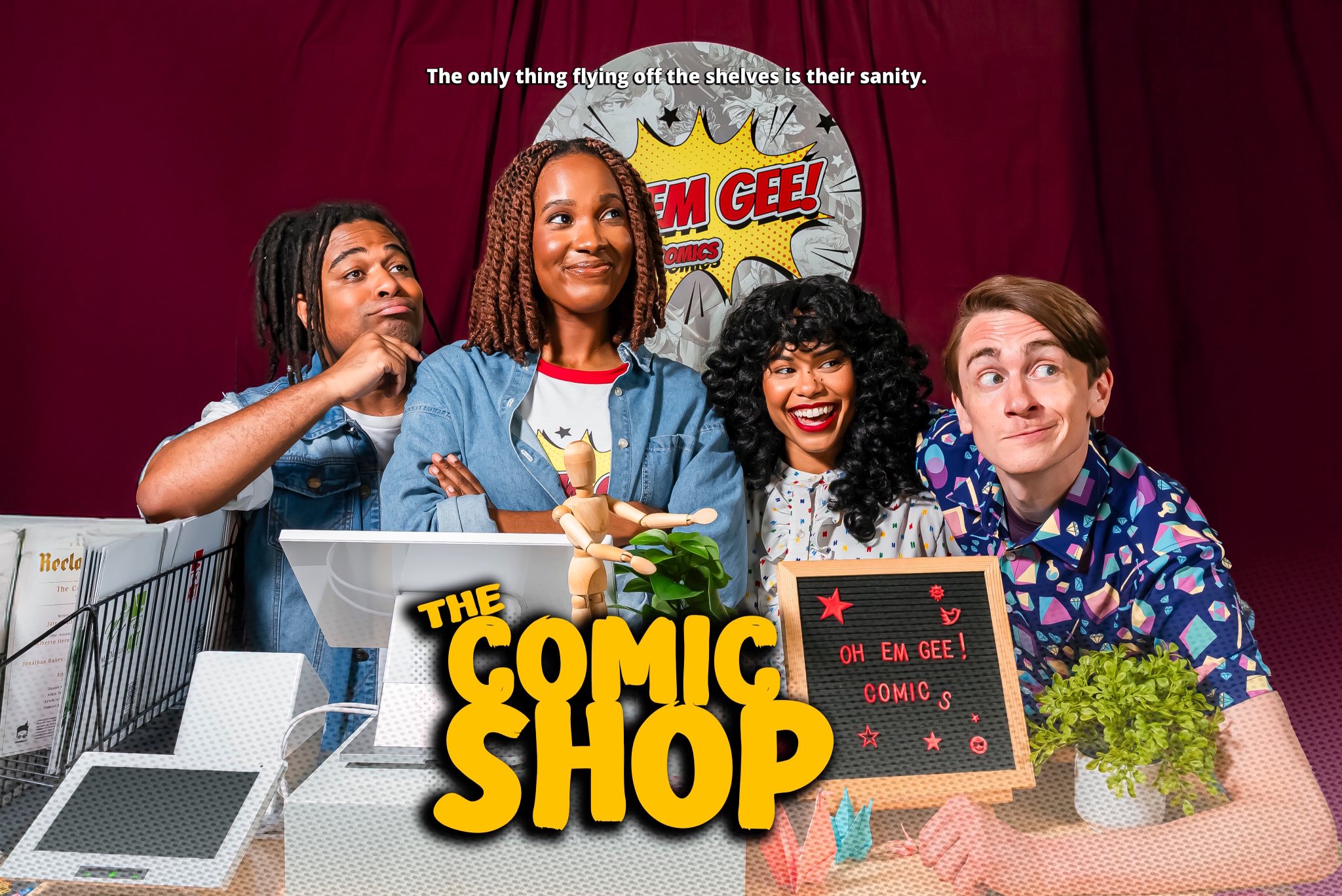
Ewulu's new series, “The Comic Shop,” loosens the grips from tropes. "The Comic Shop" is a comedic mockumentary YouTube series showcasing Blackness as expansive as the human imagination.
Created by Ewulu, “The Comic Shop” follows Stephanie Okeke (Ewulu) and her zany, eccentric team of employees Keith (Zeno Robinson), Dominique (Shanae Cole) and Connor (Grayson Niles) as they attempt to to keep their Los Angeles comic shop alive by any means necessary.
Cxmmunity Media sat down with writer, director and actor Ewulu to discuss creating "The Comic Shop," going independent in an age of creator economies subtly rising and about how she is redefining the portrayal of Black nerds in media.
(This interview has been edited for length and clarity, but maintains the integrity of the conversation.)
CXM: Before The Comic Shop, – before content creation — what originally pulled you toward art and storytelling, and how did that shape the way you move through the world now?
EWULU: I was a theater kid. I was a quiet, shy child, and art was the only way I felt like I could express myself. I used to get notes on my report card, and my parents would get called in, not because I was doing anything bad, but because I wouldn’t talk. Teachers were worried saying she doesn’t socialize, she doesn’t raise her hand, she doesn’t speak. I’d just be in the back corner drawing anime.
I got introduced to theater arts in seventh grade, and that’s where I found my voice. Off stage, I was still quiet – but on stage, and through acting and drawing, I could express myself. Looking back, it feels like it was always leading here. It was a long time coming.
CXM: Speaking of being in theatre, what’s one lesson that you still think about and hold value in?
EWULU: My high school theater teacher. I love her, Ms. Reed — shout out to her — always told us, “Go bigger with it.” I still keep that in mind.
She also told me I talked too fast, which was true. Back then, you couldn’t understand anything I was saying on stage. So it’s two things: go bigger and slow down. That still lives in my head when I’m performing on camera, because it’s a different muscle than stage acting.
CXM: You’ve said theater was the first place you felt unashamed in your self-expression. How did that early experience change the way you take up space now — as a creator, a leader, and a storyteller?
EWULU: I owe a lot of my creative confidence to theater, even though I’m still a shy person. Theater taught me how to become new characters, and it’s where my acting journey started. I wouldn’t have discovered how much I love acting without it.
I did theater through middle school and high school, then started taking on-camera acting classes in college. That’s when I realized I liked being on camera. All of those steps led to me creating my own independent show and starring in it. Theater was the blueprint.
CXM: From “Shades of Cosplay” to “Ex Roommate,” what skills or lessons directly shaped how you approached creating “The Comic Shop” ?
EWULU: I made “Shades of Cosplay” in college. I was a student with a Canon camera and a dream. I had friends who were big cosplayers, and they let me follow them at a convention in Texas. I was cosplaying also, and I wanted to tell the story from our perspective.
A lot of times my friends would go viral, and then the comments would get racist and bigoted. When we spoke up, people would say we were lying, or that it didn’t happen in the community. I didn’t want to only highlight the negativity though. I also wanted to show the journey of entering contests, winning and even getting awards. The point was that hate shouldn’t stop anybody from taking up space.
That was my first time that I created something tied to my real life and my interests. With “The Comic Shop,” I’m obsessed with comics and superheroes and so are my friends, so I wanted to write a show about a world I know, but didn’t see reflected when nerd culture shows up in the media. I’m creating what I want to see, and if it touches other people, even better. “Shades of Cosplay” was my first step into telling stories about the geek space and the Black nerd experience.
“Ex Roommate” was my first narrative short. I wrote it, directed it and acted in it. I hadn’t taken professional acting classes yet, so you can tell my performance was rough.
CXM: You were great!
EWULU: Oh thank you! But I directed it. So imagine acting, writing, and directing in it. That was my first time directing anything narrative, so it definitely showed me that wearing a lot of hats is not easy.
With “The Comic Shop,” I came in thinking I’d direct an episode while starring, showrunning and writing. That experience taught me it’s okay to take a hat off and let other people do what they do — sometimes better than you.
I’m a Virgo. If I could clone myself 20 times, I would! But it just showed me that it's okay to take a step back and find somebody who can actually do this job. 9 times out of 10 better than you. 'cause you don't be directing girl.
CXM: How hard was it to relinquish control to let others shine when it came to the comic shop?
EWULU: It wasn’t about control. It was my brain saying, “If I can’t do it, nobody will do it the way I see it.” Handing it off can be scary, but I had a great team.
It was great to be able to write a script and then hand it off to directors I trusted. They asked questions whenever they wanted more details, and they all really shined.
I always say I try to be Superman without a Justice League sometimes, and that just doesn't work. I feel like this experience definitely taught me it's okay to call the Justice League for help every once in a while. You can't be Batman, diva — you can't just be Superman. You gotta have your Wonder Woman, you gotta have your Green Lanterns.
I think that's what this process really showed me! From the cast, the crew, the directors, the producer, the other producers, everybody killed it. I couldn't be more proud of what we created.
CXM: From your perspective what makes the workplace a perfect setting for a comedy?
EWULU: Because dumb stuff happens at work. Everybody that's ever had a nine-to-five knows that you spend a lot of your life at your nine-to-five. Everybody has had those moments where you're like, "Damn, this would make a good TV show," or like, "I feel like I'm in a TV show right now."
Workplace comedies are relatable. I had never worked in a paper company before, but "The Office" felt relatable. Stanley — not just being Black, but also being the character who cares the least about the job — that's been me many times in my jobs. That's why I feel workplace comedy works so well because everybody goes to work. There's always something that you could relate to no matter what the location.
CXM: I love the mockumentary format, how it resembles the office or even abbot elementary, with awkward pauses, and comedic timing. What about that style felt like it was the perfect match for this world and its characters you created?
EWULU: Mostly because I hadn't seen it. I kept writing this character before I knew she was gonna be Stephanie, a girl who worked part-time or volunteered part-time at a comic store teaching kids how to draw comics that dreamed of publishing her own comic book. I kept writing different stories and it just never stuck.
Then one day I thought: what if we just set a whole show in a comic bookstore and it was a comedy? My friends cosigned immediately, They are all nerds, read comics, and that cosign from them felt like I might actually have something here.
As a comic book collector, I'm always frequenting different comic book stores and stuff. Even as a customer, you experience different types of comic book fans, employees and bosses – so many different personalities in general. It was just something that was easy for me to write.
CXM: As an independent creator, how were you able to assemble such a cast and bring in special guests?
EWULU: Alanah Pearce’s cameo happened because she hit me up and wanted to help get this funded. If she was attached in some way, it would help her audience lock in. She also wanted to direct. I didn’t know she directed at the time, but she asked for the episode with the most cameo potential, so she could bring in her actor friends. That's when we got Raul Kohli since they're dating, so she pulled some strings, which was cool.
For Khary Payton, who plays Dave in the finale, I reached out through my friend Danny Fernandez, who DMed him. When Khary saw Zeno Robinson was involved, he said, “I’m in.” He was super hands-on. He’d call with ideas like he wanted to change the character’s name from Vincent to Dave, and he pitched wardrobe and traits. We’d never worked together, and he was already excited about this little indie project.
I grew up watching him as King Ezekiel on “The Walking Dead” and hearing him voice Cyborg on ‘Teen Titans” and “Teen Titans Go!” So acting with him felt full circle.
A lot of cameos were just friends of friends, or people who heard about the show and wanted to be part of it. We had others lined up that didn’t work out, but a lot of people are already like, “When season two happens, call me.”
CXM: What parts of black nerd culture do you think don’t get depicted right?
EWULU: I don't think it ever gets depicted at all. Can I say that?
The closest I’ve seen is Troy Barnes on Community — Donald Glover’s character. Usually we’re not even thought of, which is crazy because most of my friends are Black nerds. To make shows about geek culture and not feature anyone who looks like us is wild. Black people love nerd stuff. Why do you think Toonami did so well?
I was ready to see somebody like me in nerd media. And sometimes, if you want something done, you have to do it yourself. What they get wrong is thinking Black people aren’t nerds.
CXM: I think the media in general sees Black people as monolithic when there’s so many facets of us.
EWULU: Yeah there's so many different sides of us that that could be explored and I think industry is just afraid of doing that. One of my favorite Child Gambino lyrics is “these black kids want something new.” I swear it's something that they wanna say but couldn't 'cause they're embarrassed. Like, I love those lyrics so much.
And it's so true. This is stuff that we want so badly, but for so long we haven't been able to say it. Now, it's becoming more cool or palatable to like nerd stuff. Megan Thee Stallion coming out saying that she loves anime. We have Michael B. Jordan sharing his love for anime and video games. Now is the time.
Like if there's, there's no better time than now to start, you know, showing faces like us and like putting us in these spaces.
CXM: There’s an interview with BGN where you say each of the 4 characters are a extensions of your personality, what are the personality traits that you see within yourself within them, and do you ever cringe when you watch it back?
Oh, absolutely. A lot of cringing because there were a lot of little storylines that were pulled from my own personal life that I put into the comedy and just made it funny.
Stephanie’s moment with her mom? That’s basically my life. My parents didn’t want me in entertainment, so moving to L.A. was me choosing myself. Stephanie opening the shop is her choosing herself.
It’s funny watching people laugh at scenes that came from my real life. Like, “Haha, that’s so funny” — and I’m like, yeah… that was real. Trauma into comedy.
There’s a line in episode five where Stephanie talks about a kid bullying her and calling her the Predator because she wore braids. True story — his name wasn’t Darius, but it happened.
Stephanie is about 95% me — more strict and type A, but that’s me. Keith is the big-ideas guy — that’s me. Dominique is the fashionista, the fem nerd side we don’t see enough — also me. And Connor — even though he’s the token white boy — I pulled a lot of myself into him, too. He’s the know-it-all, especially about what he loves.
If you talk to me about “Dragon Ball Z,” you better have your facts straight. That’s Connor with comics and D&D. He’s also goofy, and Grayson Niles brought that to life.
They’re all me, pretty much.
CXM: I can see that!
Oh, thank you!
Then there's Connor, even though he's a token white boy, I still pull like a lot of me into him. He’s the know-it-all. I’m not saying I’m a know-it-all, but I definitely have those moments. If you’re talking to me about something I love — like Dragon Ball Z — you better have your facts straight. I don’t know many people who know more about DBZ than me. You see the Dragon Ball behind me — come prepared.
That’s Connor with comics. That’s Connor with D&D, especially. He’s also goofy and silly — you see it when he’s the DM for their first D&D campaign. Grayson Niles did a great job bringing that to life.
So yeah — they’re all me, pretty much.
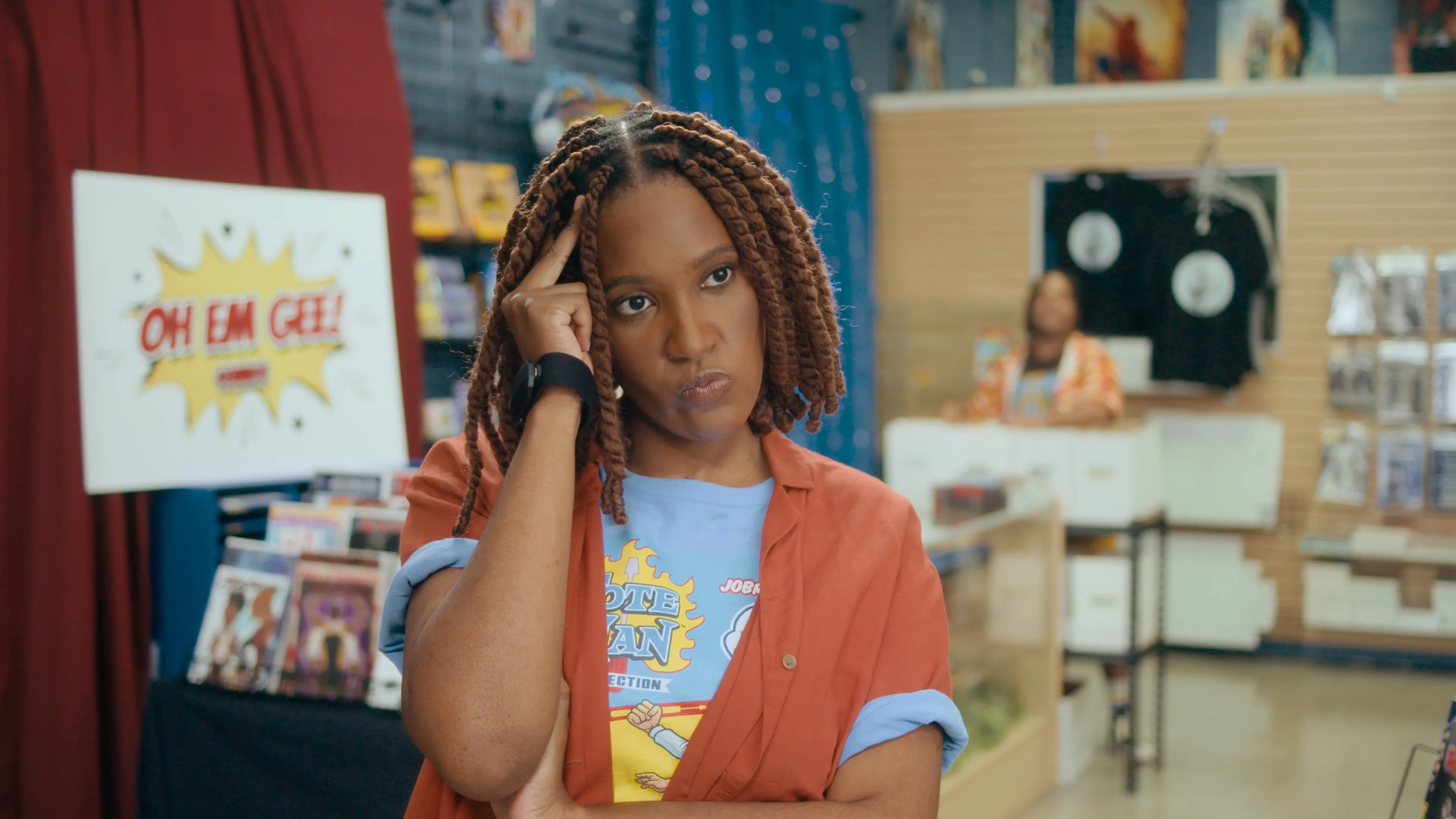
CXM: In an interview with Deadline, you mention how the character Stephanie is 99% you, what do you think you learned about yourself while playing this character?
Stephanie showed me that she's a very stubborn girl. I remember Frankie [fantasticfrankey], she was like, “oh, she likes to son Keith a lot”, which is very true. And I feel like sometimes in real life I have a habit of, like I said before, if I can clone myself a million times, I would and just have myself do all the work. And so she [Stephanie] inspired me to lean on other people more, because I see what happens when you don't through her. She might've just lost her best friend.
You see all the chaos that happens when you don't, lean on your friends and trust others to do things. So, I feel like that's one lesson that I learned with Stephanie is like, don't put your foot in your mouth, give other people the opportunity to help you.
Also listen. listen to other people. Your ideas are not the only ones in the room. Never believe that you are the smartest person in the room. And I feel like Stephanie has a habit of doing that a lot of times. But then, her friends, employees show her like, “Hey, we got ideas too, and you're not running this by yourself”.
CXM: In a couple of interviews, you mention having dreams of creating a comic book and a manga. What’s stopping you, and what’s a story you are dying to tell?
EWULU: Oh my gosh! Well, some of the stories will be told now because "The Comic Shop" is getting a comic book that'll be released sometime early next year, which I'm really excited about.
Growing up, I wrote this comic in seventh grade where my friend was a pig overlord who wanted to turn everybody into pigs, and I had him turn all my bullies into pigs. It was hilarious.
There’s an anime I’ve always wanted to create called Alien Princess Yuna. It’s about an Earth girl that looks exactly like an alien princess named Yuna. The princess crash-lands on Earth and meets the Earth girl Arrica. I was just making up names. Is Arrica even a Japanese name? I don’t know… the younger me didn’t care.
They switch lives: the Earth girl goes to outer space and becomes the alien princess, and the alien princess gets to live as a regular Earth girl, which is the life she always wanted. It's a slice-of-life, sci-fi series.
One day. Every time I mention it, people are like, “That sounds fun.” And I’m like, you get me. One day.
CXM: I mean, what can we do to get this off the ground and get this in motion? I just wanna know.
Listen, one day. Don't worry. Let me lock in first!
CXM: Speaking of independent comic book owners, just to highlight them, can you give me some comic book artists or comic books that you feel that people should check out?
EWULU: A big one that we highlighted in the season finale was ‘KISHA Demon Eater.” That one was popular on set. It's by Newton [Lilavois] and that one was like a fan favorite on set for sure. It's about a girl named Kisha who eats demons. I knew I wanted to highlight that in the show because it's a black artist and writer. It's so badass.
We accidentally left a poster up in the comic store after we wrapped, and Joe, the owner of the Comic Den where we filmed, texted me and asked, “Do you know where we can get more copies? People keep looking at the poster and asking for it.”
I made that connection, and now apparently Keisha demon eater is being sold in his store. So yeah, KISHA: Demon Eater, look that one up. It's fire.
CXM: Has there been a piece of feedback that you received from actual comic book shop owners that you truly value?
EWULU: A lot of shop owners and employees have been excited. Hearing them say, “This is accurate,” or “I worked in a comic shop for 13 years — this is so accurate,” makes my heart jump. This show is for them, too. Knowing the people in that world relate to it is all I could ask for.
What surprised me is people who aren’t nerds loving it — and especially people with kids. I never thought of The Comic Shop as family-friendly, but parents keep saying their kids love it. Kids are asking, “When’s the next season?” They’re singing the theme song around the house.
A friend sent me a video of her toddler singing, “Where are we going? We are going to the Comic Shop.” I was like, this is what I wanted. It’s been cool seeing the audience grow.
And Patton Oswalt watched it — he was basically live-tweeting in my DMs while watching the pilot: “Oh my God, this is funny.” We’re getting him for season two. We’re getting him.
CXM: Launching a Kickstarter at that scale is a very public leap. What did you have to believe about yourself before you could ask others to believe in "The Comic Shop"?
I had to believe in the comic shop before I could get others to believe in it. If I didn't believe in it, it wouldn't have gone anywhere. I also had to believe that I had a story to tell that people wanted to see—a good, unique story that deserved to be seen by the world.
One thing I always say: I'm not good at being vulnerable. If you've ever run a Kickstarter, you know a big part of the game is vulnerability because you have to literally go out and ask people to donate, to give you money. It feels like dry begging. I had to learn to be vulnerable and bet on myself and trust that this idea needed to be brought to life. This is something that couldn't just sit on a page anymore.
Believing in myself was key because people told me, “We’d never heard of you, but your content had that ‘get in, loser — we’re making TV with or without you’ energy.” They were like, OK, we like her. We want to be part of whatever this is. I’m grateful that resonated because we raised more than $207,000.
If you don’t believe in it, people can see it. And if you start slipping because the numbers aren’t moving, you’ll fall off. The last week of the campaign, we had $86,000 left to raise. Can you imagine raising $86,000 in seven days?
CXM: In Seven Days…?
And that was just to get to our first goal—I was still hoping for $200,000. Imagine me looking at that number and being like, oh my God, we have seven days left to raise this much. There would be times where I'm just like, maybe I should just let whatever happens happen and not put any effort in anymore because this is starting to feel embarrassing.
But a friend of mine told me that “you're not responsible for the outcome, only the effort that you put in.” And I think it was that quote that made me lock in. I was like, okay, I'm going to keep making content every day. I don't care if that app just came out yesterday.
We soared well past that $160K and I couldn't be more proud.
CXM: You’ve said you hope to one day have "The Comic Shop" get picked up by other networks such as Hulu and Netflix. With everything that's happening within the media industry, what are your thoughts on independence, not just as a necessity, but as a long-term strategy?
EWULU: Independent TV is coming back. There are articles every day saying people watch YouTube on their TVs more than they watch traditional TV.
Netflix is even bringing podcasts onto the platform — everybody sees the power of going independent. Do I think everyone should stay independent forever? It depends on what kind of creator you want to be. But there’s real power in it.
I think everyone should develop an independent project at least once. It sharpens your skills, forces you to wear hats and gives you creative freedom you won’t always have. If you want to move up in this industry, that level of freedom won’t last forever — so take advantage of it while you can.
The industry feels it, too. People are leaving TV and starting shows on YouTube. The independent wave is back.
CXM: For creators watching what you’ve built and feeling the pull to go independent themselves — what would you want them to get right before they ever launch a Kickstarter?
Build an audience. You need to be able to soft launch your project before making it go live. I think that's one mistake a lot of people make. They think they can launch without campaigning, and that’s not how it works.
Even before I launched “The Comic Shop,” I had my proof of concept out there, so I was making a lot of content from that. I was also making sure that people followed the campaign page, so that on launch day we would have like a good amount of people donating from day one. I know it sounds easier said than done, but it's possible. Many projects get built every day off of people who were unknown at one point. Take your time.
Also, use the internet wisely, don't let the internet be your only source of getting people to know about your project. I was literally at cons and I would tell people like, “Hey, this is The Comic Shop!”
I would go to my local comic bookstores and be like, “I'm making a show called The Comic Shop and it’s a workplace comedy about a comic bookstore.” I was out there canvassing for my life!
Don't be afraid to get dirty.

.png)