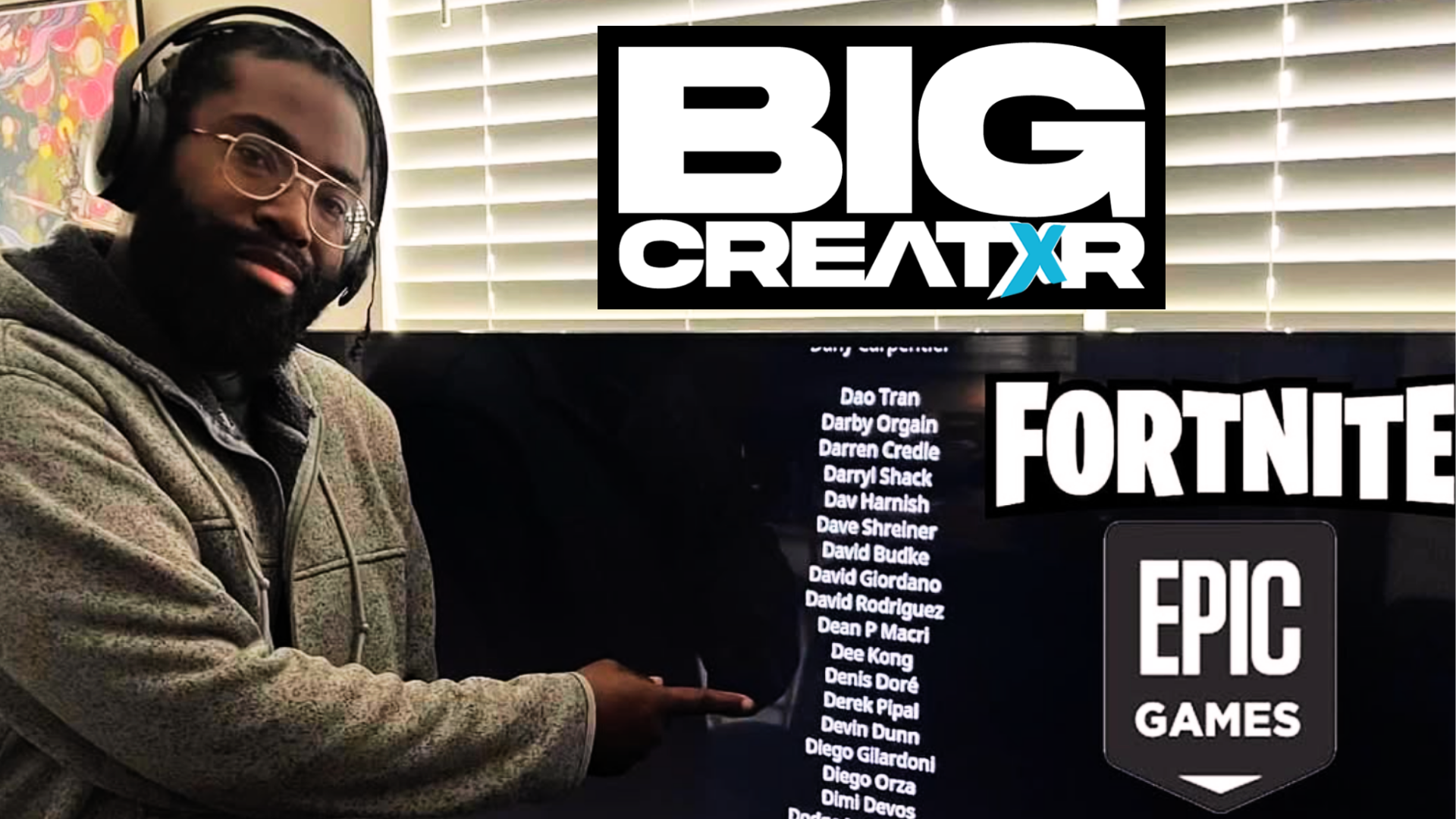
This week Cxmmunity Media’s Content Creator Collective, BigCreatxr, hosted a workshop with D3Senpai, who shared valuable insights into how to land a job in the video game industry.
D3Senpai works as a professional video game animator with experience at Harmonix Music Systems, the studio behind the popular titles Rock Band and Guitar Hero, that was later acquired by Epic Games. He currently works as a technical animator.
With many searching for their next opportunity, knowledge and resources that share advice to break into gaming is scarce, but CXM seeks to remove these barriers with monthly conversations for content creators that want to expand their brand.
Read the highlights of the advice from D3Senpai below (the full discussion has been condensed and edited for clarity):
CXM: How did you get plugged into the community and Discord?
D3: ”I was a part of the creation of Fortnite Festival when we had no idea what we were doing at that point. Then after my internship at Harmonics and Epic, I ended up switching gears and becoming a technical animator for High Voltage Software; they're a part of Keyword Studios.
High Voltage was part of the technical animation on Fortnite, specifically the Battle Pass. So, every time a new season dropped, and you guys were able to see what the new Battle Pass was like I had a helping hand in building that and creating those characters.
Now, I am a senior technical animator at Behavior Interactive. If you don't know, they make Dead by Daylight. I'm doing a project within that game. I can't say what it is yet, but I can't wait to show you guys.”
What are some of the Do’s and Don’ts of the industry?
(specifically for animators) “Learn real time engines. That's one of the main things that they're going to ask is: what engine do you use? That’s Unreal Engine or Unity. You can do animation and blender sometimes, but things like engines are really key when it comes to doing anything in video games.
Cinematics and transitions have become more flawless and seamless because of the new technology that we have today and it's important that you stay on top of what's changing, especially in your field, whether it's animation, whether it's VFX, visual effects whether it is programming
Another new thing is building a short-focused, high-quality demo reel. This is basically showing your work to the company, and you don't want it to be a 10-minute long video. Thousands upon thousands of people are trying to get into a specific company and recruiters don’t have time to just sit and watch all of your work.
You have to sometimes stop yourself and ask yourself: “if this was a company that is looking at my work, would they hire me based on this work?”
Would a degree be necessary to do what you do?
“Do not rely on degrees alone. I have a MFA in Animation. It's the highest degree that you can get in animation. There's no PhD.
Just because I have that degree doesn't mean that I'm qualified to teach or qualified to be in the industry. Even though you took the time to get further in your education doesn't mean that's gonna guarantee you the job.
It's the skills that matter the most. It's what you can do with what you're learning and stuff and not even doing the same thing as everybody else doing. Separate yourself. Do something completely different.
One of the big rules that I was taught from my seniors in the industry is that just because you landed a job doesn't mean you stop searching for a job, especially in the time that we live in now. Studios are closing down, people are losing their jobs. The industry is wicked, but you can't be comfortable in thinking that you are safe because you landed somewhere. You never know what the next day is going to be.”
Many animators have done internships or side projects too. Can you speak on building a personal brand in this industry?
“If you got something that you feel like is going to be so different or so unique or you know you want to enhance something, then create it yourself because people are always gonna be interested to see what people are out there creating. You may just inspire somebody else, and you may not even think that, but they'll be like, “Hey, I saw you work on this thing, and it inspired me to either help you create this thing, or it inspired me to help create my own thing.”
So, that's one thing. Also, apply for internships, associates, and junior roles. Those roles, even though I will say truthfully and candidly in the industry now, there's not many of those roles being out there like they were a few years ago, but they're still there. Apply for those internships, and apply for those associates and juniors because those are literally catered to be a shadow of a senior in the industry.
They are there to help you learn, and they want to see what you do with that knowledge. They want to see where you go with that knowledge. If you grow, how passionate you are, how fast you learn or are you able to contribute and help in a way that they didn't, they never thought of one that you could, or that they didn't know that they needed.
It starts there. I started off as an intern. You gotta prove that you belong there and if you're hungry enough to stay and land the job.”
How else can someone get their name out there in the gaming industry?
“Another way is to participate in game jams and online challenges. This goes with the creative project and personal projects. If you search game jams, sometimes the rule is that you have 24 hours to create a game, and you can be part of a small niche team that is trying to build a game in 24 hours.
If you win it, they may showcase your game. They may add money to the game to make it even more grander or bigger, and that adds to your demo reel. Again, what you wanna do is always get to a place where you can add to your demo reel.”
What’s a good starting point for beginners?
“I would say if it's animation that you're trying to do, I would say a good point for beginners is Maya. Maya is the universal program for animators. Pixar, Disney, Marvel, and Epic Games all use it.
Grab the Animator’s Survival Kit. Literally, any animator that you have talked to has this in their books. This teaches you everything about animation like the ball test. This is like one of the first things that you do in animation class.”
Have I worked with many black folks in the industry?
“Yes. Actually at Harmonics, one of the interns that I worked with was Black. One of the VFX artists and modelers there was black.
That's why we wanted to do this talk because it is always good to see another brother or sister in the industry. It's such a niche industry, and I still get wow or shock reactions when I say, oh, I'm a video game animator, because it is not something that you hear from a black person ever.”
What resources do you use when you need to reignite your passion?
“When it comes to reigniting, for me, it's playing the games or watching movies. I think one of the blessings and curses of being an animator is that I can't look at animation the same. I can't just look at it and just enjoy the movie. You develop an analyzing brain.
Whether I'm watching anime 3D, animation or 2D animation, it doesn't matter. I'm always analyzing and looking at their performance. I'm always looking at how they approach this action. That kind of rekindles the fire within me to want to try something different.
That animation was so good that it made me want to go animate something. So just dig into your craft and find things that you never really paid attention to.”
I find myself reading a job description and worried about falling, failing to do the job if I get hired. Have you ever experienced this? If you have, how do you get over it?
“I'm gonna tell you the number one thing that every single person in the industry has dealt with. Imposter syndrome. It is real. Trust me.
You will feel like you're stepping in somewhere that you don't belong, like at all, like because of the talent there. But you gotta remember, bro, everybody starts somewhere.
Sometimes, people are at the top, and sometimes people are at the bottom, but it doesn't matter because y'all are at the same place. You're in the same company.
If you're looking at a job and wondering what criteria you fall into, if you fit about more than 75% of that job, you're good. You're good. Nine, nine times outta 10 from what I've been told when they're, when recruiters are looking for you or, and are looking for those potential hires, they know you may not be able to do everything that is in that job description, but if you can do 75% of it, you're good.”
What red flag should we look out for when seeking work in the industry, especially as a POC?
“I would say, be wary of scams when looking for jobs specifically there are some job postings that just look so real and you'll just apply to 'em, and then sometimes you'll get a reply back, excuse me I remember last year I got an email from Sony and I'm falling outta my chair.
But then when I looked at the email address and copied it into Google, Google said, no, this isn't legit.
If there's just no video interview at all, it's just nothing but emails, most likely that's a scam. So if they're asking you to fill out this questionnaire and send it back. Then, they will get back with you. Nine times outta 10, it's a scam. No real recruiter is gonna send you a questionnaire for you to answer to type out and stuff like sometimes you don't know.”
Any final words?
The right company will find you. It may not be the company that you feel like you deserve, but they're there for a reason. Think of it as a stepping stone. Think of it as a lesson and stuff. At the end of the day, that's all it is. You're continuing to learn the craft.
No matter where you go, learn, build, grow, continue to network, continue to put yourself out there and work. The companies are gonna come to you eventually. Your dream company is gonna come to you. I'm telling you, it happens all the time. People just create, and companies will come to them and be like, “Hey, we like what you're doing over there. Come work for us.”
It happens. It happens more than you think. So just keep pushing and doing what you do out there, whether you're in the video game or comic book industry. Keep doing what you're doing.”
To gain direct access to ask questions during these creator conversations, join the Cxmmunity Discord here.
Applications for BigCreatxr are also open here.


.png)