While the console wars may be over between Xbox and Playstation, a new challenger has entered the arena that may cause a disruption and become a worthy contender in the console gaming space.
After a failed attempt to enter in the console gaming arena about a decade ago, Valve has been behind the scenes refining their SteamOS for their own dedicated hardware. Like the Frankenstein monster being sparked with life, the Steam Deck was the first living proof of its success, giving Valve a vision of how far they can go.
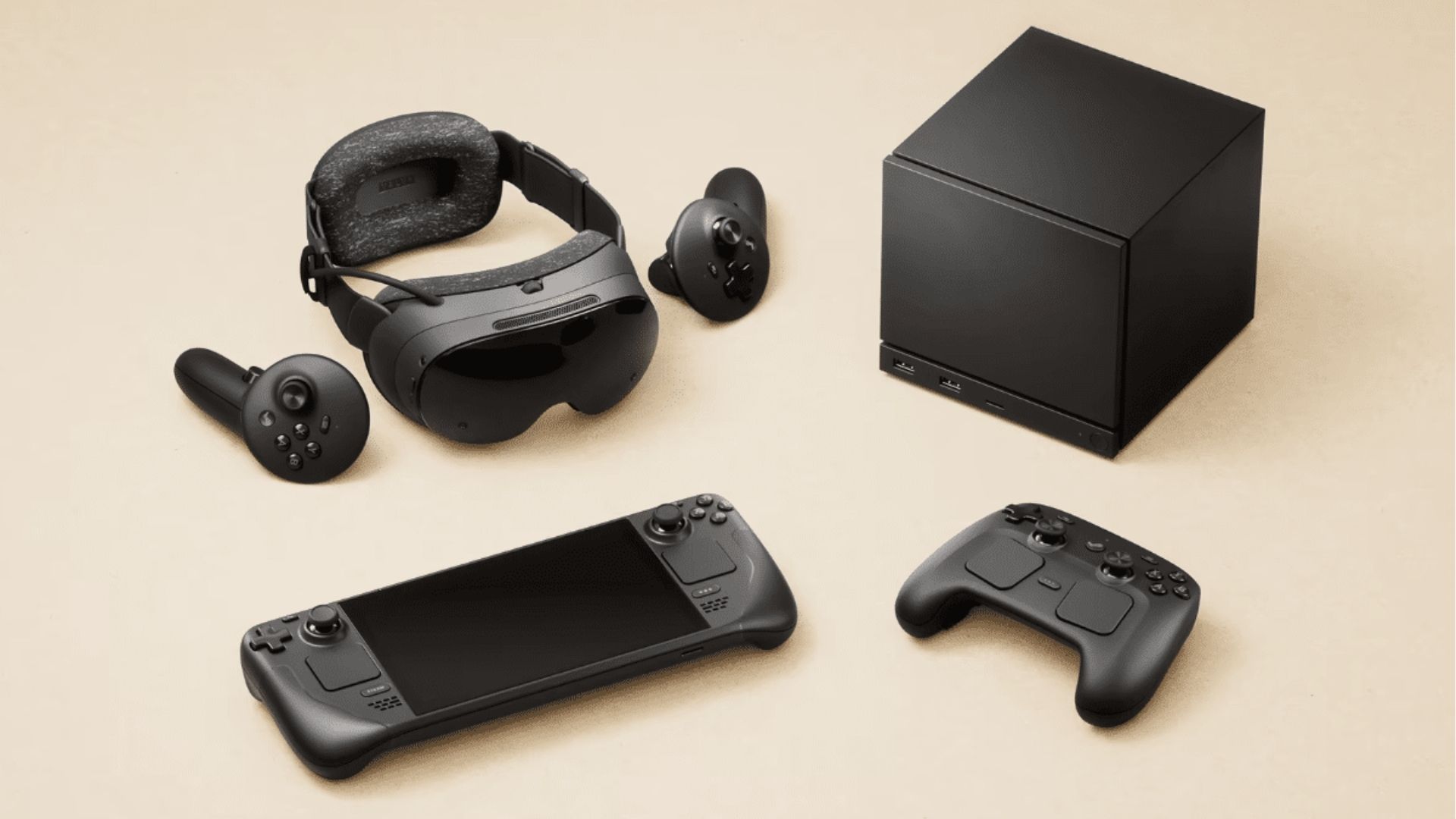
On November 12th, Valve unveiled a new steam controller and VR hardware set called Steam Frame, but the company’s biggest announcement: its refined and well-designed PC-Console hybrid, the Steam Machine.
Is it a PC or Console? It’s Both.
The Steam Machine is designed to be treated like a console, to sit next to your TV, living room, and even on your desk like a gaming PC. Set to be available early 2026, Valve described it as a pre-built PC running SteamOS, built with the open source Linux.
As reported from Valve, the PC-gaming console will be able to run most games at 4K resolution at 60 fps, utilizing upscaling technology while running a lower voltage compared to most typical gaming PCs and consoles. It will possess a lot of the best features of the Steam Deck, but on a much more powerful hardware, as Valve claims it’s six times more powerful than its handheld sibling.
Since it's still a PC at heart, it functions like one.
You’ll have the ability to install apps, programs, and other operating systems. With it being open-source, you can pretty much do whatever you want with it; whether its modding and customizations, and dare I say emulators, the possibilities may be endless.
The community can play a real role in improving the experience over time. In contrast with its competitors, Xbox, Playstation, and Nintendo, the Steam Machine isn’t a closed system, and that’s where it draws a line in the sand from its rivalry.
Steam Machine’s Design and Specs
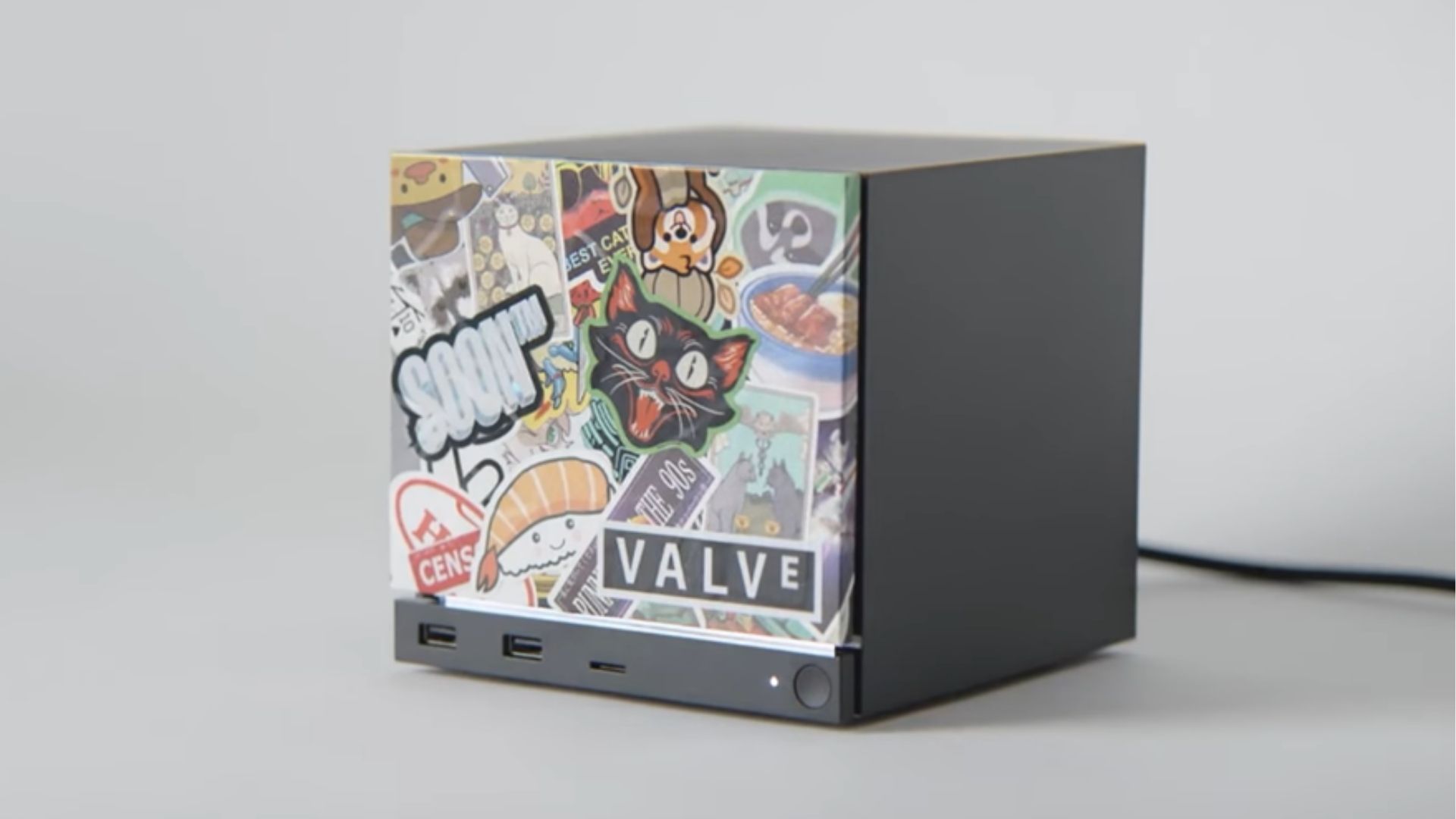
The Steam Machine has a minimal, compact and sleek design with a resemblance of Nintendo’s GameCube and a Xbox Series X if you cut it in half. It’s a subtle device, but not subtle enough to where visitors come over and wonder what this 6-inch cube is and if it's holding some kind of tesseract inside.
It comes with a matte black finish, along with a customizable LED light strip, which will show different system functionality–and my personal favorite–swappable faceplates, which is a strong selling point. The faceplate is magnetic, so it makes it uber simple and fun to personalize the device.
Now, down to the specs.
I’m going to spare you the nerd language, and let you know that Valve said that the Steam Machine power sits between an Xbox Series S and a base PS5.
Valve said the Steam Machine uses a custom AMD Zen 4 chip with 6 cores and 12 threads, paired with a 28-CU RDNA 3 GPU and 8 GB of GPU memory. That combination gives them the confidence to claim ‘six times’ the power of the Steam Deck.
It comes in either a 512 GB or 2 TB NVMe SSD model, and there’s a microSD slot for additional storage. Networking includes Wi-Fi 6E and Bluetooth 5.3. At ~156×152×162mm, it’s compact enough to sit under your TV. Valve even built the power supply inside — no bulky brick.
.png)
Who’s the Steam Machine For?
So far, this new Steam Machine sounds promising for someone like me, who wants to dip into PC gaming but gets turned off by the cost and the complication of building a full rig. The PC world is a different experience—performance, mods, flexibility—but I’m still not sure if something like this would actually pull me away from the PlayStation and its exclusives.
However, one can argue that PS exclusives will eventually cross over to the PC, and we’ve seen that with titles such as God of War: Ragnarök, Marvel's Spider-Man 2, Horizon Forbidden West, Returnal, Uncharted: Legacy of Thieves Collection and many more.
The Steam Machine’s biggest flex is having full access to the Steam Library. We’re talking tens of thousands of games — from tiny indies to the same big-budget releases you’d see on PlayStation or Xbox — plus a ton of PC-only weird, niche, or experimental stuff that never touches consoles. On top of that, Steam is known for its constant sales and seasonal events where games regularly get steep discounts. And let’s not forget: it costs nothing to play online.
One thing to keep in mind is that most PC games are built for Windows, while SteamOS is based on Linux. Before you change your mind, Valve has already solved that conundrum. They created a compatibility layer called Proton, an open-source tool that lets Windows games run on Linux by translating what a Windows program is trying to do into something Linux understands.
In practice, you just press “Play” and the game runs. Valve has been iterating on Proton for years now, and the result is that the vast majority of Steam games already work on SteamOS devices such as the Steam Deck, so it may end up being nothing to worry about.
What makes all of this even more fascinating is how the Steam Machine slots into Valve’s growing hardware ecosystem. Similar to Apple — where everything syncs from the iPhone to the Mac, Apple Watch, and that forgotten, ridiculously expensive Vision Pro — Valve is building its own interconnected world.
.png)
The Steam Machine will sit alongside the Steam Deck, the Steam Frame VR/PC headset, and the new controller, all plugged into the same Steam account and library. With Steam Cloud handling your saves and settings, you can swap between devices without losing progress.
My biggest concern with the Steam Machine is its power. Although it’s six times more powerful than the Steam Deck, it still sits in the mid-range PC and edges into the entry level of today’s generation of consoles, which may be perfectly fine for most people.
Valve is clearly betting that most players won’t need cutting-edge, top-shelf hardware. So yes, you may be more than happy with stable 1080p gaming, with some titles bumping up into 1440p. If you already own a high-end PC, you might shrug at this, unless you want something for your living room that takes some of the load off your main rig.
Still, Valve has something special on its hands — something that could be a real game-changer in the console space. With the Steam Machine approaching gaming like a simple plug-and-play console, while offering the flexibility and power of a PC, it has the potential to reshape how people think about living room gaming.
Between being open-source and having full access to the Steam Library, it’s definitely worth paying attention to.
Or as Content Creator and Artist Keatsdidit put it:
“I think a disruption in the console gaming space has been long overdue, and I believe the Steam Machine is going to do just that. For gamers and creators, having an open, PC-powered console means more freedom, more access to games, and fewer limits on how we play or create. It gives players real choice, gives creators more ways to share and monetize their work, and brings fresh energy to a space that’s needed it for a long time.”
But I can’t help thinking about the future — how this machine competes with the upcoming PS6 or the rumored Xbox PC-style console on the horizon. For all the potential here, the determining factor will be its price point. Valve said it wanted the Steam Machine to be affordable, somewhere in line with today’s consoles, but with inflation, shifting economies, and hardware costs constantly rising, who knows what “affordable” will actually look like by 2026.


.png)