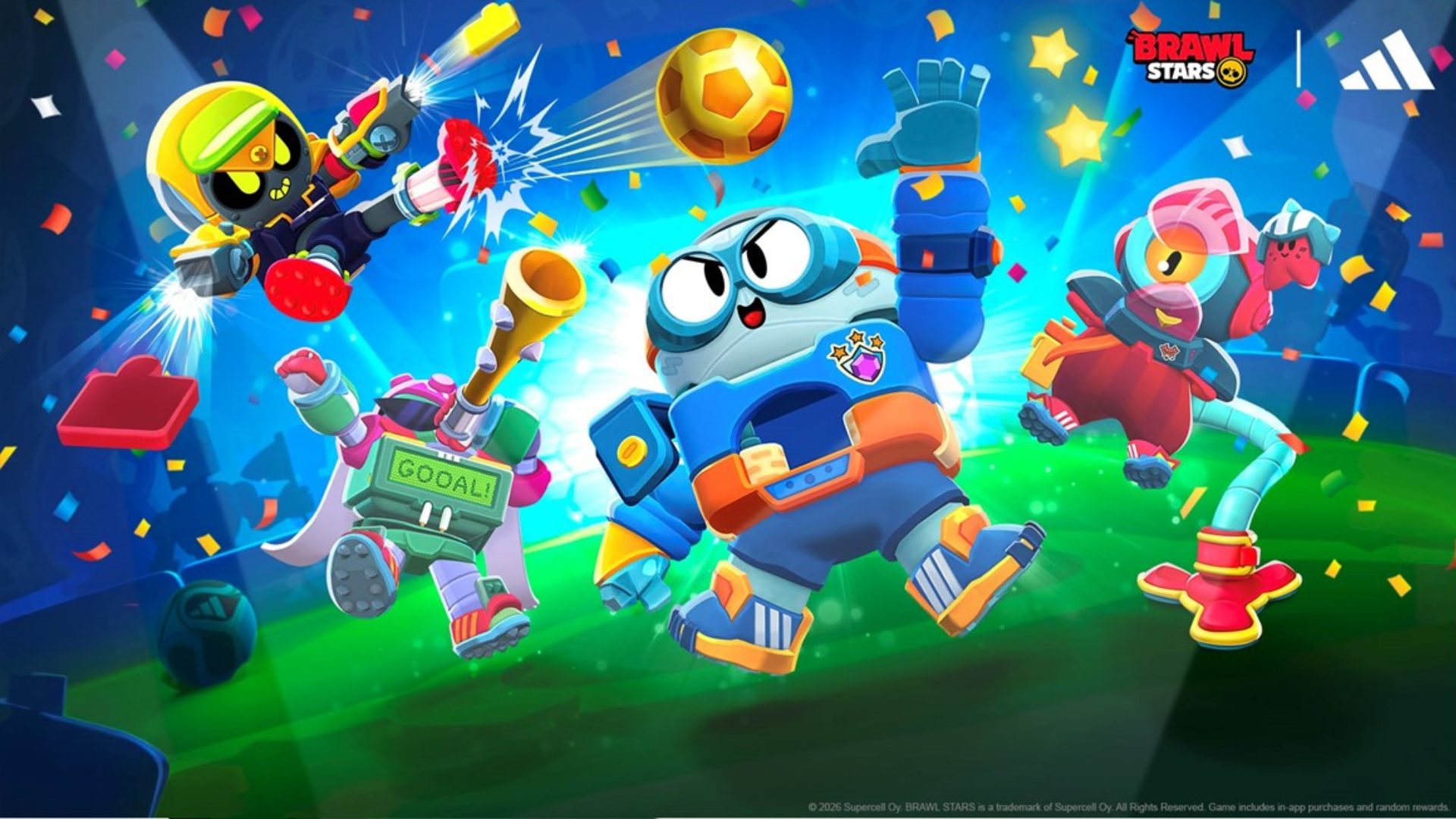
From June 18 to July 2, Adidas is running an in-game event inside Brawl Stars called the Star Cup, built around a new competitive mode named Super Ball, an amped-up evolution of the fan-favorite Brawl Ball with a full tournament structure. On the surface it is a cute soccer crossover. Underneath, it is a clinic in modern brand strategy.
Here is the thing brands keep relearning. The young, global, diverse audience that everyone wants to reach is not waiting around on traditional channels. They are inside mobile games, and Brawl Stars is one of the biggest playgrounds there is. Adidas did not buy a billboard. It built a playable experience inside a place its audience already lives, then attached a competitive format so people would stick around and care.
Super Ball is the clever part. Instead of slapping a logo on a loading screen, Adidas tied the activation to an actual game mode with tournament stakes. That turns a brand moment into gameplay, and gameplay into time spent. Time spent is the currency. A logo gets seen. A mode gets played, shared, clipped, and competed in.
For our community, this matters on two levels. First, mobile gaming and mobile esports are where a huge share of Black and Hispanic players actually compete and socialize. Console and PC get the magazine covers, but mobile is the people's platform, global and accessible. When a brand like Adidas treats Brawl Stars as a serious marketing venue, it is implicitly recognizing where that audience is.
Second, this is the playbook our own partnerships world runs on. The brands winning right now are the ones that show up as participants, not as interruptions. They add something to the experience instead of taxing it. That is the difference between an activation people remember fondly and an ad people skip.
The timing is not a coincidence either. This same window saw EA roll out a dedicated advertising platform for brands, formalizing in-game ad inventory at one of the largest publishers in the world. Read those two moves together and the message is loud. In-game is no longer the experimental line item. It is becoming a primary channel, and the budgets are following the attention.
For creators and marketers in our space, the lesson is to stop thinking of games as a place to advertise and start thinking of them as a place to build. Adidas did not interrupt Brawl Stars. It joined the match. The brands that figure out that distinction are the ones that will own the next decade of culture.
Sportswear in a mobile shooter sounds like a gimmick. It is actually a glimpse of the future of marketing.
.png)